Multi-location Patient Acquisition Strategy
The Enterprise Framework for Healthcare Groups
Running patient acquisition across multiple healthcare locations is a fundamentally different discipline from single-practice marketing. Budget misallocation, attribution errors, capacity mismatches, and brand fragmentation compound with every location you add. This guide covers the strategic framework enterprise healthcare organizations use to scale patient acquisition without those compounding failures — and where Neolytix Growth Services fits into that infrastructure.
faster growth with availability-based bid adjustments vs. uniform campaigns
lost over 18 months by one orthopedic group from attribution misconfiguration
CAC inflation from schema fragmentation across multi-location portfolios
of new patients book with the first practice that answers their call
Why Multi-location Patient Acquisition Fails — the Three Structural Problems
Most enterprise healthcare organizations don’t have a marketing problem. They have a structural problem that marketing spend makes worse. Three failure modes account for the majority of wasted acquisition spend in multi-location groups.

The Enterprise Patient Acquisition Framework
Effective multi-location patient acquisition operates at three simultaneous tiers. Most agencies manage only the campaign tier. Enterprise organizations need all three running in coordination.

Tier 1
Network level
Brand governance, unified schema and structured data, network-wide reputation management, and enterprise SEO authority that prevents locations from cannibalizing each other in search results.

Tier 2
Location level
Hyperlocal campaigns calibrated to each location’s capacity, payer mix, and competitive environment. Availability-based bid adjustments, location-specific landing pages, and Google Business Profile optimization per site.

Tier 3
Patient level
AI-enabled communication that handles the gap between inquiry and booked appointment — instant response, 2-way SMS, automated scheduling, and reminder sequences — so generated demand actually converts.
Audit and Baseline
Establish true patient acquisition cost by location before moving budget. Most groups undercount PAC by 4–6x because they measure only ad spend, not the full cost including agency fees, tools, and staff time.
Fix Attribution Infrastructure
Deploy HIPAA-compliant call tracking, server-side conversion APIs, and consent-mode analytics per location. This is non-negotiable before allocating budget at scale — misattribution compounds every dollar spent.
Align Campaigns to Capacity
Map each location’s available appointment slots weekly. Adjust bid strategies and budget allocation in real time so marketing spend flows toward locations that can actually serve patients — not sites already at capacity.
Close the Inquiry-to-appointment Gap
85% of new patients book with the first practice that answers. AI-enabled scheduling, instant missed-call response, and 2-way SMS convert generated demand into booked appointments — reducing effective PAC without changing spend.
See What Your Multi-location PAC Should Actually Be
Book a free 30-minute enterprise assessment. We’ll audit your current attribution setup, identify capacity-campaign misalignments, and show you exactly where patient acquisition spend is leaking across your locations.
Patient Acquisition Cost Benchmarks by Specialty (2026)
Understanding PAC context is critical for multi-location groups allocating budget across specialties. A $500 PAC in behavioral health is highly efficient. The same number in urgent care signals a broken funnel.
| Specialty | PAC Range (2026) | Typical LTV Ratio | PAC:LTV Ratio | Primary Cost Driver |
|---|---|---|---|---|
| Urgent care | $40–$120 | $300–$800 | 1:4–1:8 | Speed-to-answer, walk-in volume |
| General dentistry | $150–$300 | $5,000–$10,000 | 1:25–1:45 | Front-desk conversion, reviews |
| Specialty dentistry (implants, ortho) | $400–$800 | $6,000–$30,000+ | 1:15–1:50 | High-intent paid search, case value |
| Primary care | $75–$350 | $2,000–$6,000 | 1:10–1:30 | Local SEO, insurance panel coverage |
| Mental health / psychiatry | $200–$600 | $8,000–$25,000 | 1:20–1:60 | Insurance complexity, intake friction |
| Behavioral health / addiction | $1,000–$2,500 | $20,000–$50,000 | 1:10–1:30 | Long decision cycle, family-driven search |
| Speech therapy / pediatric specialty | $150–$400 | $4,000–$12,000 | 1:15–1:40 | Referral dependency, insurance routing |
Sources: BSPKN 2026 Healthcare Marketing Benchmarks, Patient Prism March 2026 analysis (1.1M+ connected calls), BrightClick 2026 Healthcare Trends. PAC ranges reflect blended cost across all channels including agency fees and tools — not ad spend alone.
Neolytix Advantage
Multi-location dental groups show the widest PAC variance within a single organization — often 40–60% between their best and worst-performing sites. The driver is almost always inconsistent front-desk performance and missed calls, not campaign quality. This is addressable through AI-enabled communication, not more ad spend.
HIPAA Tracking
HIPAA-compliant Attribution Across Locations
Standard analytics tools — Google Analytics 4 with default configuration, Meta Pixel on appointment pages — are now an active compliance risk under 2026 OCR enforcement guidelines. Multi-location groups running these tools on patient-facing pages are one audit away from significant liability. HIPAA-compliant attribution requires a different infrastructure architecture entirely.
Server-side Conversion APIs
replaces browser-based pixel tracking on all patient-facing pages
Consent-mode Analytics
reduces PHI capture before data reaches Google and Meta ad platforms
HIPAA-compliant Call Tracking
dynamic number insertion with PHI safeguards on recording and storage
Location-isolated Attribution
each location’s leads, calls, and booked appointments tracked separately
EMR/EHR Appointment Matching
marketing leads reconciled against actual billed visits to close the revenue loop
Zero Third-party Pixel Policy
patient-provided data via intake and preference centers as consent-safe attribution signal
Capacity-aware Budget Allocation
The most common budget waste in multi-location healthcare is generating demand at already-full locations. Unlike retail, where more demand always helps, healthcare has fixed provider capacity. Overfunding a booked-out location produces frustrated patients who can’t get appointments and wasted ad spend. Underfunding an open-capacity location leaves revenue on the table.
- Available slots, wait time, and provider availability by service line Pull weekly capacity data from each location’s EMR
- High capacity (scale spend), moderate (maintain), constrained (reduce or redirect to waitlist capture) Classify each location
- Google Ads location bid modifiers calibrated to current capacity, updated weekly Apply availability-based bid adjustments
- Routing patients to uncredentialed providers is a conversion dead-end; Neolytix credentialing data resolves this in real time Monitor credentialing status per provider
- Capacity changes as providers are added, locations expand, and seasonal demand shifts Review and reallocate monthly

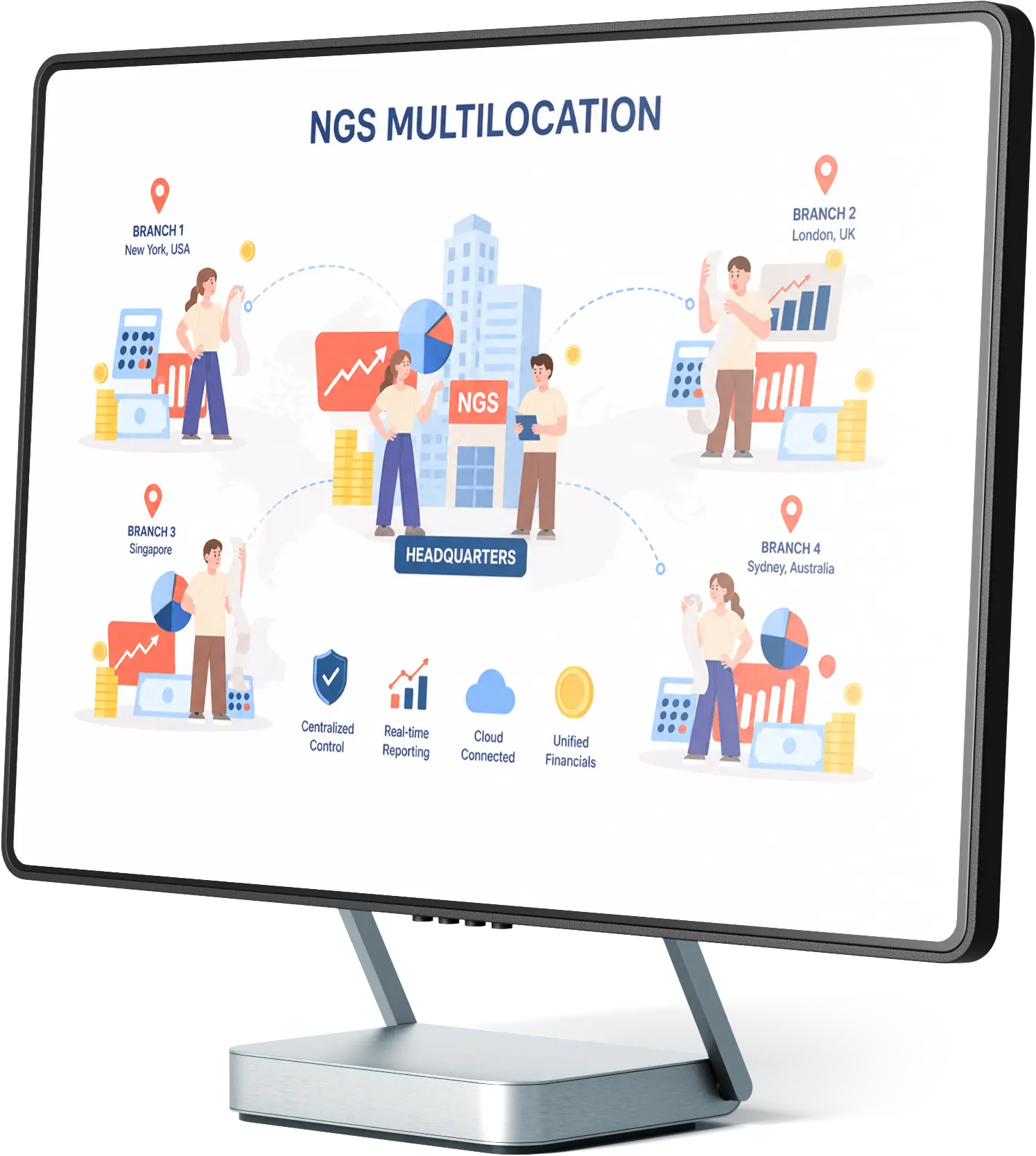
The NGS Multi-location System
Neolytix Growth Services is the only healthcare marketing partner that connects all three layers of the framework — network brand, location campaigns, and patient communication — within a single operational ecosystem that already includes RCM, credentialing, and patient access infrastructure.
Network-level Brand Governance
Unified structured data, schema consolidation across acquired locations, and network-wide reputation management that builds collective authority instead of fragmenting it.
Location-level Campaign Management
Hyperlocal SEO, Google Ads with availability-based bidding, and location-specific landing pages — each location treated as a distinct market, not a copy-paste of the network campaign.
Ai-enabled Patient Communication
Instant missed-call response, 2-way SMS, automated scheduling with EHR write-back, and appointment reminders — closing the inquiry-to-appointment gap at every location, 24/7.
Unified Enterprise Dashboard
One view of network-wide PAC, cost per appointment by location and service line, and marketing’s contribution to revenue — updated in near real-time, accessible by C-suite and marketing leadership.
Neolytix Advantage
Because NGS operates within the Neolytix ecosystem, capacity data from scheduling systems, active credentialing status, and RCM revenue data are available to inform marketing decisions in ways that no standalone agency can replicate. The integration is native — not a custom project or API build.
Frequently Asked Questions
Everything you need to know about Multi-location for healthcare enterprises.
How Many Locations Does a Healthcare Group Need Before a Dedicated Multi-location Strategy is Necessary?
The structural problems — attribution collapse, capacity misalignment, and schema fragmentation — begin at 3 locations and compound rapidly above 5. Groups with 3–5 locations typically still run single-practice marketing playbooks and absorb the inefficiencies without realizing it. By 8–10 locations, the compounding effect is measurable in PAC variance across sites and unexplained budget inefficiency. A purpose-built multi-location framework is warranted from 3 locations onward, and essential above 5.
What is a Realistic Patient Acquisition Cost Target for a Multi-location Dental Group?
For general dentistry, a blended PAC of $150–$300 across the network is considered healthy. High-value service lines — implants, full-arch, Invisalign — can justify $400–$800 PAC given procedure revenue. The more important metric is PAC variance across locations: a 40–60% spread between your best and worst-performing sites indicates an operational or intake problem, not a campaign problem. Fixing front-desk conversion rates and missed-call response typically reduces effective PAC by 25–40% without changing marketing spend.
How Does Neolytix Growth Services Handle M&a Integration — Newly Acquired Practices Joining an Existing Network?
NGS provides standardized M&A onboarding playbooks that cover three critical windows: pre-close (audit the acquired practice’s digital infrastructure, domain authority, and attribution setup), transition (maintain lead volume through ownership change without dropping visibility), and post-close integration (merge structured data, consolidate reviews and listings, and bring the new location into the network’s attribution stack). The goal is zero drop in patient acquisition volume through the transition.
What's the Difference Between Blended PAC and Effective PAC, and Which Should Multi-location Groups Track?
Blended PAC divides total marketing spend by total new patients acquired across all locations — it tells you the average. Effective PAC accounts for inquiries that were paid for but never converted due to missed calls, slow response, or intake friction. For a group spending $50,000/month and missing 30% of calls, effective PAC is 40–65% higher than blended PAC. Multi-location groups should track both, with effective PAC serving as the operational health metric and blended PAC as the budget efficiency metric.
Discover Your New Path Toward Long-Term Growth

Your organization’s transformative journey toward long-term patient growth and exceptional patient experience starts here. Schedule a no-obligation consultation today.

