

Many healthcare organizations face challenges establishing and maintaining an in-house Chronic Care Management (CCM) program due to resource limitations and operational complexities. This is where outsourcing chronic care management to a trusted partner like Neolytix can revolutionize patient care delivery.
In this article, we will explore the benefits of starting a CCM program, the risks to consider, and present six compelling reasons why healthcare providers should outsource chronic care management to Neolytix.

What is a Chronic Care Management CCM program?
A Chronic Care Management program involves proactive, coordinated care for patients with chronic conditions. It aims to improve patient outcomes, enhance patient engagement, and reduce healthcare costs on a macro scale. CCM programs typically include regular phone calls, face-to-face interactions, and care coordination services to support patients in managing their chronic conditions effectively.
By implementing a CCM program, healthcare organizations can provide comprehensive, personalized care plans tailored to each patient’s specific needs, and get fairly compensated for doing so.
What are the benefits of starting a CCM program?
1. Enhanced Patient Care
A CCM program enables healthcare providers to offer personalized care plans, regular phone calls, and face-to-face interactions, improving patient engagement and better health outcomes. By focusing on proactive care management, providers can effectively monitor patients’ progress, address potential complications early, and support patients in adhering to treatment plans.
2. Increased Revenue Stream
Implementing a CCM program can generate an additional revenue stream for healthcare organizations. By outsourcing chronic care management to Neolytix, providers can tap into the expertise of skilled care coordinators who handle tasks such as eligible patient identification, documentation, and billing.
This streamlined process ensures accurate reimbursement for services, contributing to financial sustainability.
3. Reduced Total Cost of Care
Chronic conditions often lead to frequent hospital readmissions and emergency room visits, significantly driving up healthcare costs. With a well-structured CCM program, healthcare providers can proactively manage chronic conditions, prevent complications, and minimize costly hospitalizations. By effectively working with patients’ care, providers can achieve cost savings and improve the overall value of care delivered.
4. Improved Care Team Collaboration
Outsourcing chronic care management to a 3rd party vendor like Neolytix allows healthcare providers to leverage the expertise of dedicated care coordinators. These professionals collaborate with the existing care team, ensuring seamless coordination, improved communication, and effective care plan implementation.
By sharing the workload and streamlining care coordination, providers can optimize their resources and focus on delivering quality care.
5. Enhanced Patient Engagement
A CCM program facilitates regular communication between care coordinators and patients, fostering increased patient engagement. Patients receive ongoing support, education, and guidance through personalized phone calls to manage their chronic conditions more effectively. This continuous engagement empowers patients to take an active role in their healthcare journey, leading to better adherence to treatment plans and improved health outcomes.
6. Expertise in Chronic Care Management Services
Outsourcing chronic care management to Neolytix allows healthcare providers to benefit from their specialized expertise. Neolytix’s care coordinators are trained in CCM best practices, stay up-to-date with industry guidelines, and possess the necessary knowledge to support patients with various chronic conditions.
By partnering with Neolytix, healthcare organizations gain access to a team of professionals dedicated to providing high-quality chronic care management services.
What are the risk factors to consider when implementing a CCM program?
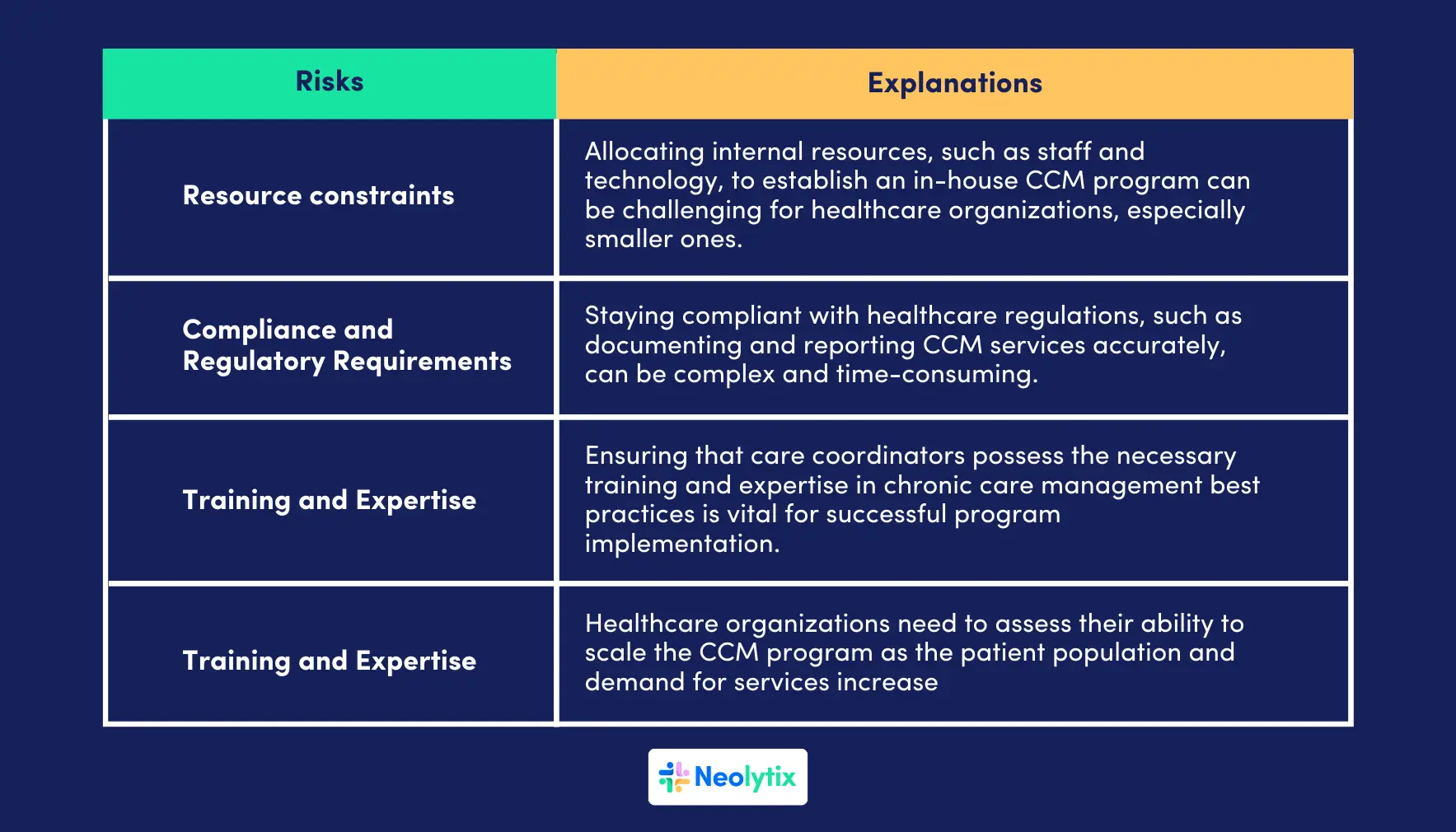
Implementing a CCM program requires careful consideration of potential risks. Some key factors to assess include:
Tips for Successfully Implementing a CCM Program at Your Healthcare Organization
Implementing a Chronic Care Management (CCM) program can significantly benefit your healthcare organization and the patients you serve. To ensure a successful implementation, consider the following tips:
- Assess Organizational Readiness
Evaluate your organization’s readiness for implementing a CCM program. Assess factors such as available resources, staff training needs, technological infrastructure, and the support of key stakeholders. Understanding your organization’s readiness will help you plan effectively and address potential barriers proactively.
- Define Program Goals and Objectives
Clearly define your CCM program’s goals and objectives. Determine the specific outcomes you aim to achieve, such as improved patient satisfaction, reduced hospital readmissions, or increased patient adherence to care plans. Setting measurable goals will help you track progress and demonstrate the program’s effectiveness.
- Build a Collaborative Care Team
Establish a multidisciplinary care team that includes care coordinators, primary care providers, specialists, nurses, and other relevant healthcare professionals. Foster effective communication and collaboration among team members to ensure seamless care coordination and patient engagement.
- Train and Educate Staff
Provide comprehensive training and education for staff involved in the CCM program. This includes care coordinators, clinicians, and support staff. Ensure they understand the program’s objectives, documentation requirements, and best practices for chronic care management. Ongoing education and support will empower your team to deliver high-quality care to eligible patients.
- Leverage Technology Solutions
Utilize healthcare technology solutions that streamline communication, documentation, and data management within the CCM program. Electronic health record (EHR) systems, telehealth platforms, and secure messaging tools can enhance care coordination, improve efficiency, and facilitate seamless communication among care team members.
- Promote Patient Engagement
Encourage active patient participation and engagement in their care. Educate patients about the benefits of the CCM program, the importance of adhering to care plans, and self-management techniques for their chronic conditions. Utilize various communication channels, including phone calls, patient portals, and educational materials, to support patients in taking an active role in their healthcare.
- Monitor and Evaluate Program Outcomes
Regularly review key performance indicators, such as patient satisfaction, healthcare utilization, and clinical outcomes. Analyze the data to identify areas for improvement and make informed decisions to optimize program effectiveness.
By following these tips, you can set your healthcare organization up for success in implementing a CCM program. But as you can imagine, doing all the above is a resource-hungry endeavor.
Outsourcing chronic care management to a trusted partner like Neolytix can reduce this burden and further support your efforts by providing expertise, scalability, and technological solutions.
6 Reasons to Outsource Chronic Care Management (CCM) to Neolytix
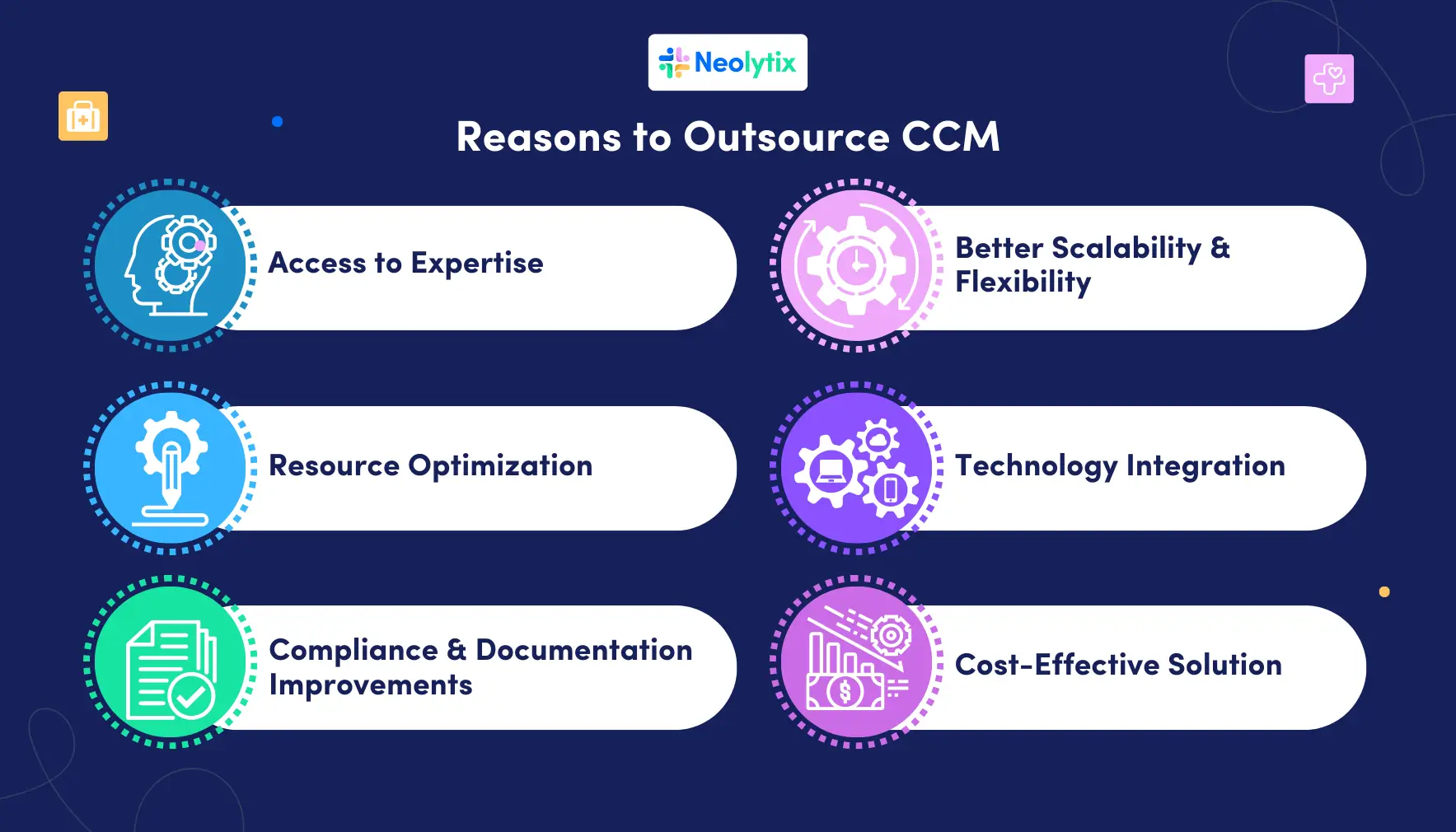
There are several reasons to outsource management care, and we’ve listed some of the most important ones, such as:
1. Access to Expertise: Neolytix specializes in providing comprehensive chronic care management services, ensuring access to highly skilled care coordinators with expertise in managing various chronic conditions.
2. Resource Optimization: Outsourcing CCM allows healthcare providers to optimize their internal resources, focusing on core competencies while entrusting chronic care management to a dedicated partner.
3. Compliance and Documentation: Neolytix ensures adherence to regulatory requirements, accurate documentation, and proper billing, minimizing the risk of compliance issues for healthcare organizations.
4. Scalability and Flexibility: Neolytix offers scalable solutions that adapt to changing patient volumes, ensuring seamless program expansion without compromising quality.
5. Technology Integration: Neolytix utilizes advanced technological tools to facilitate efficient communication, documentation, and data management, enabling seamless integration with existing healthcare systems.
6. Cost-Effective Solution: Outsourcing chronic care management to Neolytix provides a cost-effective solution, eliminating the need for extensive investments in staffing, training, and infrastructure.
Challenges of In-House Chronic Care Management
Managing a Chronic Care Management (CCM) program internally presents numerous challenges that can strain healthcare organizations. Understanding these challenges can highlight the advantages of considering outsourced healthcare solutions as a viable path.
Resource-Intensive
Managing a Chronic Care Management (CCM) program in-house is resource-intensive. The high demand for staff time and resources often overwhelms healthcare providers. This challenge is further compounded by the need for specialized knowledge and training, which can be both costly and time-consuming.
Administrative Burden
The administrative burden of managing chronic care protocols and documentation is significant. Compliance with regulatory requirements and reporting adds another layer of complexity, making it difficult for in-house teams to keep up. This is where outsourcing chronic care management can provide a streamlined solution.
Scalability Issues
As patient numbers grow, scaling CCM programs becomes increasingly difficult. Maintaining consistency and quality of care is a major challenge. By opting to outsource chronic care management for private practice and outsource chronic care management for hospitals, healthcare providers can effectively manage these scalability issues.
Key Features of Effective CCM Outsourcing Services
When considering chronic care management outsourcing, it’s crucial to understand the key features that make these services effective. These features ensure that outsourcing provides significant benefits to healthcare providers and their patients.
Comprehensive Care Coordination
Effective chronic care management outsourcing solutions involve comprehensive care coordination. This includes the integration of care across multiple providers and settings, utilizing patient-centered approaches and care plans. Outsourced chronic care management ensures seamless coordination and improved patient outcomes.
Advanced Technology and Tools
Advanced technology plays a crucial role in chronic care management outsourcing. Utilizing telehealth, remote monitoring, and EHR integration enhances care delivery. Additionally, data analytics and reporting capabilities are essential for monitoring patient progress and outcomes. These technological tools are a hallmark of healthcare management outsourcing services.
Patient Engagement Strategies
Engaging patients through personalized communication and education is vital for successful CCM programs. Tools for tracking patient progress and adherence help maintain high levels of patient engagement. Outsourcing patient engagement ensures that these strategies are effectively implemented and managed.
Experienced Care Teams
Outsourcing chronic care management provides access to multidisciplinary teams, including nurses, care managers, and specialists. These teams receive ongoing training and development to stay current with best practices. This expertise is a key benefit of healthcare management outsourcing solutions.
Proven Track Record
The success of chronic care management outsourcing companies is often demonstrated through improved patient outcomes and reduced costs. Positive testimonials and case studies from other healthcare providers highlight the effectiveness of outsourced investment management for healthcare systems.
By understanding these key features, healthcare organizations can make informed decisions about patient solution outsourcing.